Porcelain, ceramic or natural stone: start with the material, not the photo
Porcelain is the workhorse of Maryland bathrooms for a simple reason: it absorbs almost no water. That matters in a climate with humid summers, steamy showers and winter heating cycles that expand and contract everything in the room. Porcelain belongs on bathroom floors, shower walls and shower floors, and modern porcelain can convincingly read as marble, limestone or wood without the sealing and staining worries of the real thing. Ceramic tile costs less and cuts more easily, which makes it a reasonable choice for dry wall areas outside the shower, but softer ceramic is a weaker choice for floors and wet zones. Natural stone is beautiful and honest, and some homeowners in older Silver Spring colonials will accept nothing else — just budget for sealing, more careful cleaning, and a little variation between tiles that is part of the material, not a defect. If a showroom sample does not list where the tile can be used, ask before you fall in love with it. A wall-only tile installed on a floor is a failure scheduled in advance.
Tile size, layout and grout: the choices that decide cleaning and grip
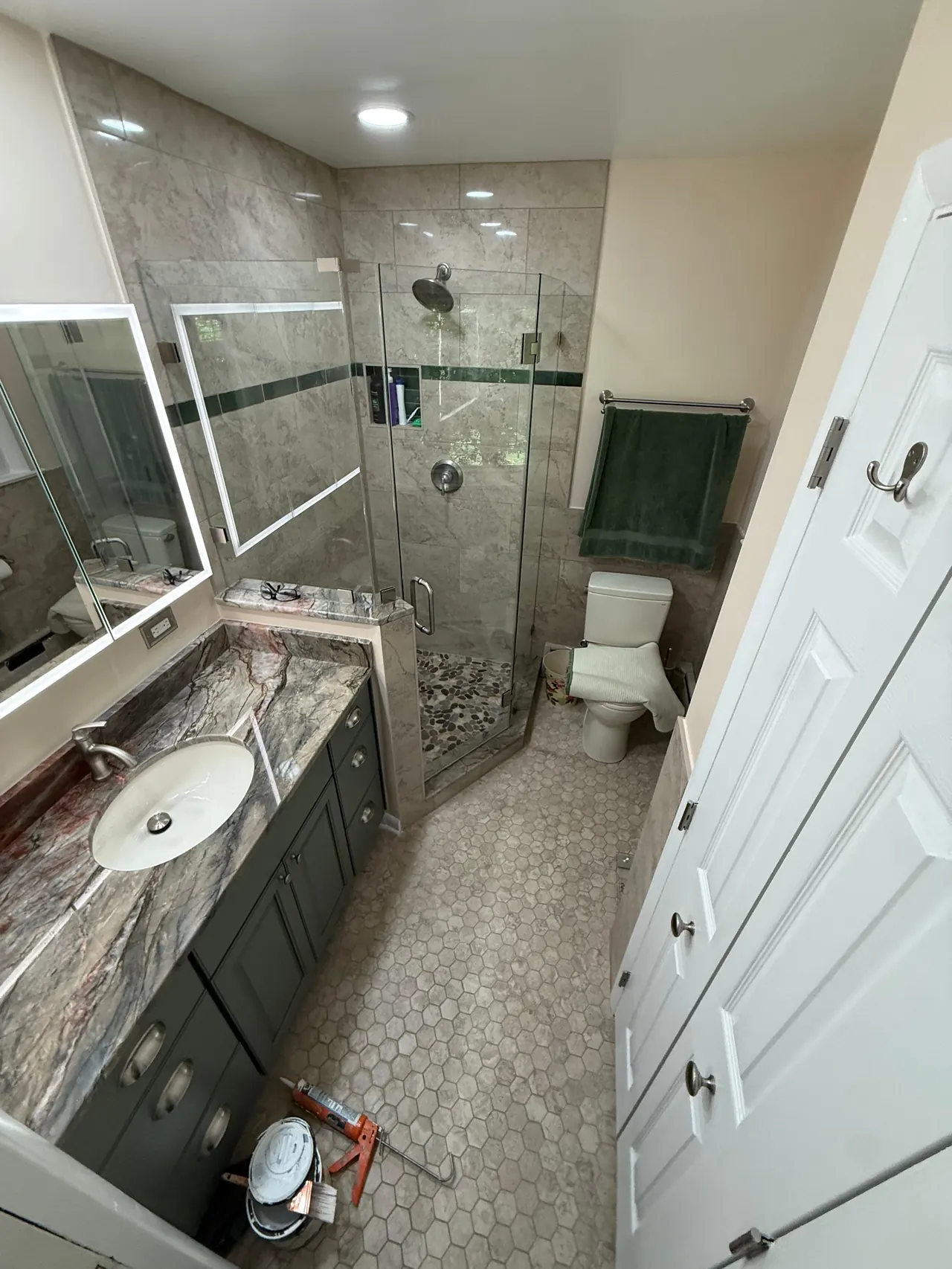
Large-format tile — 12 by 24 inches and larger — gives a calm, modern look with fewer grout lines to clean, and it works beautifully on walls and main floors when the substrate is flat. It is the wrong instinct for a shower floor. Shower floors need many small pieces, usually a mosaic on a mesh sheet, so the tile can follow the slope to the drain and so the frequent grout lines give bare feet grip. Save the large format for the walls, run the floor mosaic up an accent strip only if the pattern still drains correctly, and let the layout serve the slope rather than fight it. Grout deserves more respect than it usually gets. Standard cement grout must be sealed and maintained; high-performance and epoxy grouts resist staining and water far better and are worth their premium inside a shower. Grout color is a design decision with cleaning consequences: a grout that closely matches the tile reads as quiet and unified, a contrasting grout celebrates the pattern and shows every line, and a mid-tone hides Maryland daily life better than bright white on a floor. Our flooring team applies the same logic room by room — the flattest prep and the right material for the water the room actually sees.
Waterproofing comes before tile — every time
Tile and grout are not waterproof, no matter what a sales pitch implies. Water passes through grout joints and reaches whatever is behind the tile, so the waterproof membrane system, the sloped shower pan, sealed seams and correctly flashed niches and benches are the real shower. Tile is the clothing; waterproofing is the skin. This is the single most expensive lesson in our guide to bathroom remodel mistakes Maryland homeowners make, because a failed shower rarely leaks dramatically at first. It leaks slowly, into the subfloor and wall framing, and announces itself months later as a soft spot, a musty smell or a stained ceiling below. When you compare quotes, ask each contractor to name the waterproofing system they install, how the pan is sloped and tested, and how niches are sealed. Specific answers are a good sign. Vague answers about tile being waterproof are not. Choose your prettiest tile after that conversation, not before it.
Fixtures: buy the valve for twenty years, the trim for today
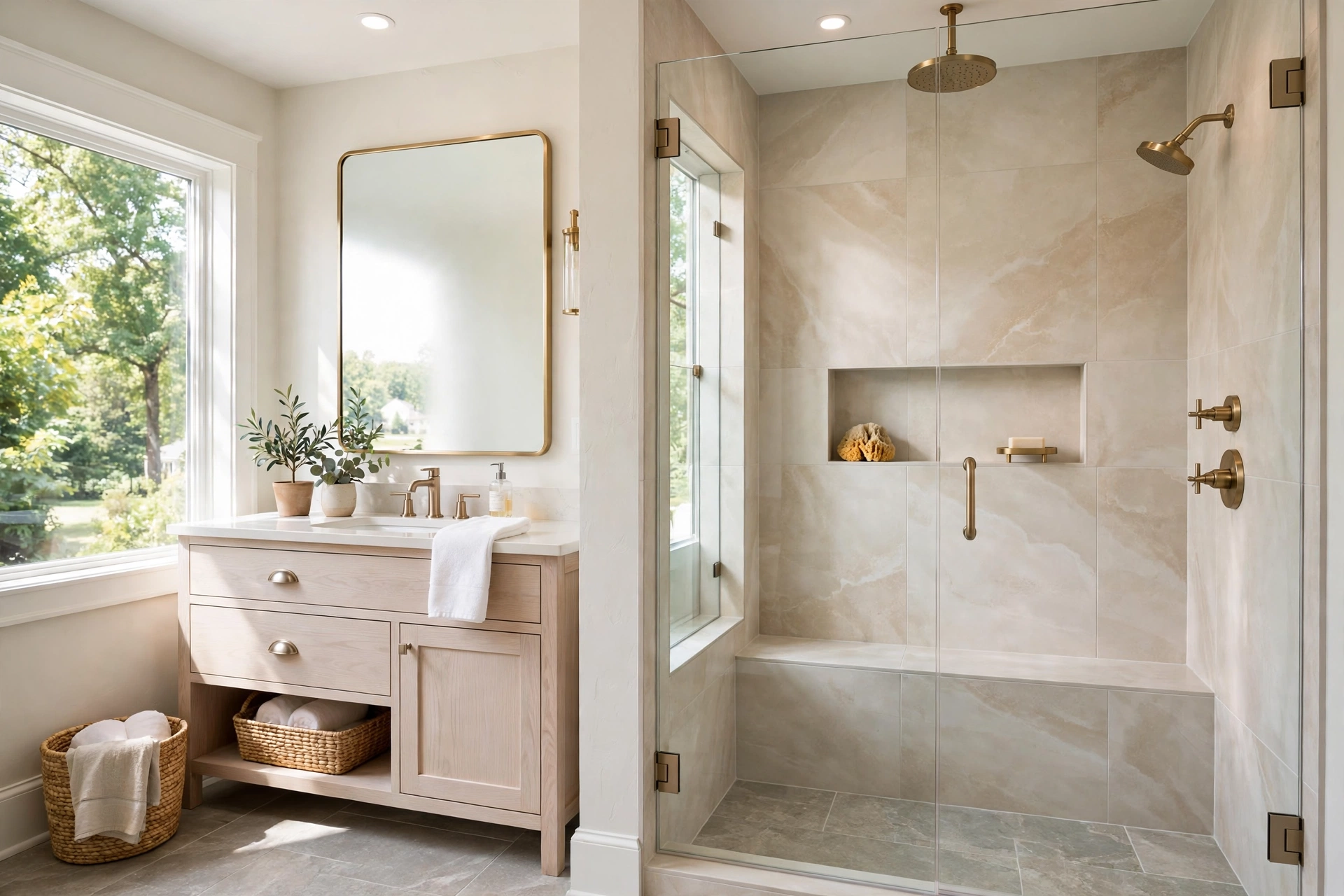
Homeowners choose fixtures by their finish, but they live with them by their valves. The valve inside the wall controls temperature and pressure, and replacing it later means opening tile. Choose a reputable pressure-balanced or thermostatic valve during the remodel, keep the model number in your project file, and then choose trim that fits that valve family — a future style refresh can then often swap visible trim without touching the wall. Brushed and matte finishes hide water spots better than polished chrome in hard-water areas, while chrome is the easiest finish to match across brands. Mixing two metals can look intentional; mixing three usually looks accidental. Decide the finish before vanity hardware and mirror frames are ordered.
A practical fixture checklist for a Maryland bathroom
- Shower head and hand shower. A fixed rain or standard head plus a hand shower on a slide bar serves daily showers, aging-in-place needs, cleaning the glass, and washing the dog in the tub — four jobs for one modest upgrade.
- Faucets. Single-handle faucets are easier for children and older hands; widespread faucets look classic on a wide vanity. Either way, choose metal construction and a finish with matching accessories available from the same line.
- Toilet. A comfort-height, elongated model with a strong flush rating is the quiet upgrade almost no one regrets. Confirm the rough-in distance before ordering — older Maryland homes do not all match the modern standard.
- Ventilation. A quiet fan sized to the room and vented outdoors is a fixture too. It protects your new grout, paint and vanity from the humidity that Maryland summers and long showers produce.
- Lighting at the mirror. Sconces or vertical lights at face height, on a dimmer, do more for how the bathroom works than a decorative ceiling fixture alone.
How tile and fixture choices move the budget
Inside a $22,000–$48,000 bathroom, tile and fixtures can swing the total by thousands without changing the room size at all. The honest levers are: how much wall is tiled and to what height, whether the pattern needs diagonal, herringbone or large-format labor, how many plumbing fixtures move, and whether the shower gets a bench, a niche and custom glass. A smart allocation we use often in Columbia and across Howard and Montgomery counties is to spend on porcelain and waterproofing everywhere, choose one focal wall or floor pattern to carry the design, and keep the remaining surfaces quieter and less labor-intensive. That gives the room a designed feel without paying feature-wall prices on every wall. Our pricing guide shows the same published ranges by project type, and the bathroom remodel timeline explains why tile, glass templating and fixture delivery dates have to be locked before demolition begins — custom glass is measured to the finished tile opening, so tile decisions literally set the glass schedule.
Order of decisions: a sequence that keeps the project calm
Decide in this order: first the layout and which plumbing moves; second, shower size, bench and niche placement, which are framed before tile; third, the tile family — floor, wall and shower mosaic chosen together; fourth, the valve and fixture finish; fifth, the vanity, counter and mirror; last, paint and accessories. Reversing that order is how small choices become change orders. Bring tile samples home and look at them morning and evening — showroom lighting lies, and a warm gray in the store can read blue in a north-facing Maryland bathroom.
Planning a bathroom and want the tile and fixtures chosen once, correctly, and installed over waterproofing that lasts? Call Eagle Home Improvements at (240) 266-8317 for a free in-home estimate, or use the lead form on this page with your preferred date and time. We will measure your bathroom, talk through materials at your table, and leave a fixed-price quote within 48 hours — MHIC #117311, with a 5-year workmanship warranty in writing.
Frequently asked questions
What is the best tile for a Maryland shower floor?
A small textured porcelain mosaic is the safest standard choice: its many grout lines provide grip and let the tile follow the slope to the drain, and porcelain absorbs almost no water. Large smooth tile on a shower floor is slippery and drains poorly.
Is epoxy grout worth it in a bathroom?
Inside a shower, usually yes — epoxy and high-performance grouts resist water and staining far better than standard cement grout and need less maintenance. On dry wall areas outside the shower, quality cement grout that is properly sealed is often sufficient.
Should all bathroom fixtures match in finish?
The plumbing fixtures should normally share one finish family for a coordinated result. A second, deliberate metal on lighting or mirror frames can work as an accent, but three different finishes in one small bathroom usually looks unplanned.
Can I keep my existing shower valve and just change the trim?
Sometimes, if the new trim is made for that exact valve family and the valve is in good condition. During a full tile remodel, replacing an older valve while the wall is open is usually the smarter long-term move, because a later valve failure would require opening finished tile.