Quartz: the low-maintenance default for busy kitchens
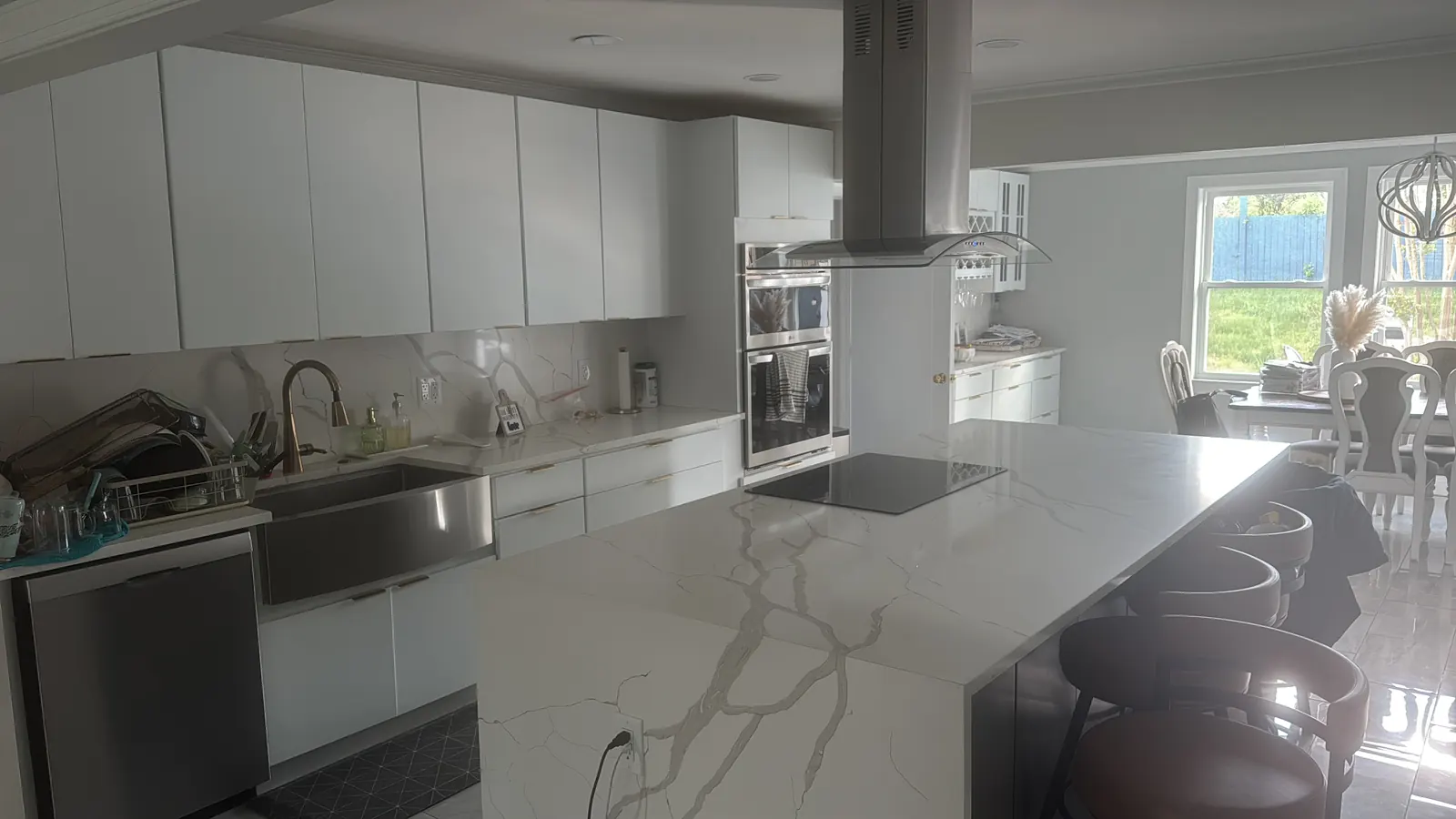
Quartz countertops are manufactured from ground natural quartz bound with resin, and that factory origin is exactly their advantage: the slab you approve is the slab you get, with no surprise veining, no fissures and no weak spots hiding in the pattern. Quartz does not need sealing — ever — and it shrugs off the daily Maryland kitchen routine of coffee, wine, tomato sauce and a humid summer's worth of lemonade pitchers. Its honest limits are heat and sunlight. Resin can discolor under a scorching pan set down straight from the burner, so trivets are a habit, not an accessory, and a bright white quartz in a sun-drenched south-facing room deserves a conversation about UV exposure before it is ordered. For the two-cook households and open-plan kitchens common in the colonials of Bethesda, quartz's consistency has one more quiet benefit: a long island and a perimeter run match exactly, seam to seam, which natural stone cannot always promise.
Granite and natural stone: heat-tolerant, one of a kind, sealed on schedule
Granite is quarried stone, and every slab is genuinely one of a kind — the movement, depth and mineral sparkle that draw homeowners to it cannot be printed or repeated. It tolerates heat better than any other common counter material and, once sealed, resists stains well. The trade-offs are maintenance and variation. Granite needs resealing on the schedule its fabricator sets — a simple process, but one that has to actually happen — and lighter granites show spills sooner than darker ones. Because no two slabs match, a large kitchen may need a seam placed where the pattern breaks naturally — a decision to make at the slab yard, in person, not from a sample chip. Marble sits in this family too, and we talk most homeowners out of it for a working kitchen: it etches under lemon, vinegar and tomato, permanently. In a kitchen that cooks every night, quartz or granite will still look like themselves in ten years.
Butcher block, laminate and solid surface: honest roles for each
Butcher block is warm, quiet under dishes and kind to knives, and on an island or a dedicated baking counter it is often the most-loved surface in the room. Its weakness is water: around a sink, standing moisture works into the end grain, darkens the wood and opens joints, so we detail block away from the wet zone or protect it with a hard finish and disciplined wiping. It also needs periodic oiling or refinishing — a ritual some cooks enjoy and others quietly abandon. Modern laminate is the budget honest broker: today's patterns are convincing, and it keeps a smaller project focused on cabinets and layout instead. It will not tolerate a hot pan or a knife, and a chipped edge is hard to repair invisibly. Solid surface sits between the two — seamless, repairable, softer under elbows — a sensible choice in the family kitchens we remodel across Columbia, especially where an integrated sink and a coved backsplash keep cleanup simple. None of these is a compromise to apologize for; each is the right answer for a specific room and a specific budget, which is why counters are chosen with the kitchen cabinets decision, as one package.
Edges, seams, cutouts and backsplashes: where the real price differences hide
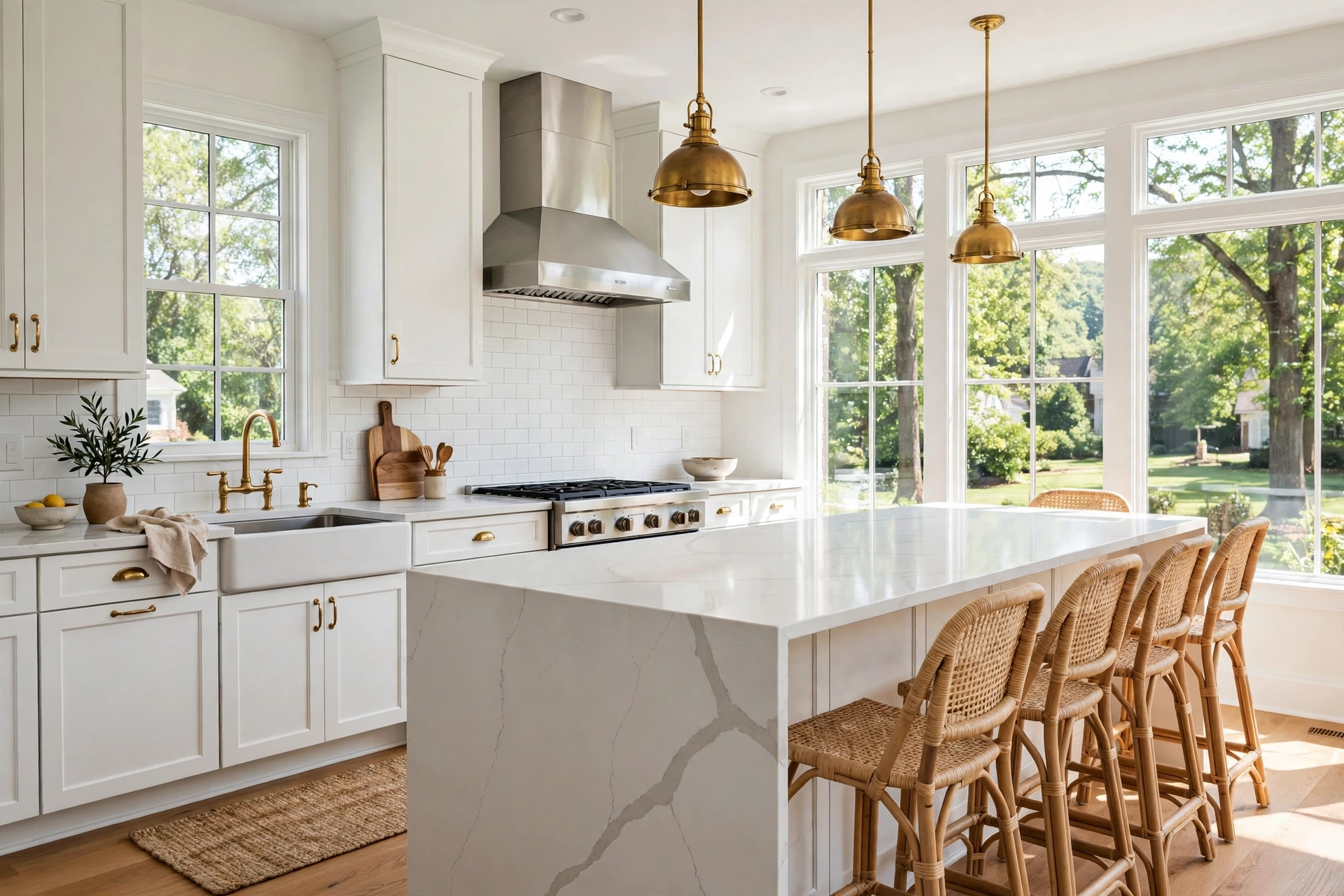
Two kitchens with the same stone can land at noticeably different counter costs, and the difference is almost never the slab alone. It is the details: a simple eased edge is included in most fabrication, while a mitered edge that makes a waterfall island look like solid stone is skilled extra labor. Every seam is planned — where it falls, how the pattern flows across it, and whether your cooktop or farmhouse sink forces a seam into a weak spot. Cutouts for an undermount sink, a cooktop, faucets and outlets are each templated and polished work. A full-height stone backsplash doubles the visible stone and the templating, where a tile backsplash lets the counter budget go further. Thickness matters to the eye more than to strength: a standard slab with a well-chosen edge profile reads as substantial without paying to laminate a thicker face. Our kitchen cost breakdown shows how counters sit alongside cabinets, labor and appliances inside the total, and our pricing guide publishes the full ranges we plan against — bring this list to any quote comparison and the numbers suddenly explain themselves.
How counters sequence with the rest of the remodel
Counters are measured, not guessed. A fabricator templates only after the base cabinets are installed, leveled and fixed — which means the countertop decision has to be made early, but the countertop itself arrives mid-project, after cabinets and before final plumbing and backsplash tile. That sequence is why a late change of material is so disruptive: a different thickness changes faucet reach, outlet height and the backsplash plan all at once. It is also why the sink and faucet are chosen before templating day — the fabricator cuts to the actual sink, not a brochure dimension. Underfoot, the counter choice should be settled alongside the flooring decision, because pale quartz over warm wood floors is one room, and the same quartz over a cool gray floor is another. Decide them at the same table, in your own light, morning and evening — showroom lighting flatters everything.
Countertop mistakes we are most often hired to fix
- Choosing from a sample chip: a four-inch square cannot show a slab's movement. Approve the full slab, or at minimum a full-size photo of the exact slab, before fabrication.
- Skipping the sealing schedule: granite that is never resealed stains slowly and blames the stone. Put the date in your project file and treat it like a filter change.
- Butcher block at the sink: the wettest two feet of counter in the house is the worst place for end grain. Move the block to the island and let stone or quartz take the water.
- Hot pans on quartz or laminate: both can be permanently marked by a pan straight off the burner. Trivets beside the range are the cheapest insurance in the kitchen.
- Changing material after templating: thickness changes ripple into faucets, outlets and backsplash. Lock the material before the template appointment, not after it.
A countertop is the surface your kitchen actually lives on — homework, hot pans, grocery bags and holiday baking all land there — so choose it for your real routine, not for a photograph. Planning a kitchen in Maryland and want the counters, cabinets and layout decided once, together, in the right order? Call Eagle Home Improvements at (240) 266-8317 for a free in-home estimate, or use the lead form on this page with your preferred date and time. We will bring material samples to your table, talk honestly about how each one ages, and leave a fixed-price quote within 48 hours — MHIC #117311, with a 5-year workmanship warranty in writing.
Frequently asked questions
Which is better for a Maryland kitchen, quartz or granite?
Quartz wins on maintenance: no sealing, consistent color and strong stain resistance. Granite wins on heat tolerance and one-of-a-kind natural pattern, but it needs resealing on schedule. For most busy family kitchens we recommend quartz; for cooks who set hot pans down without thinking, granite is more forgiving.
Do quartz countertops need to be sealed?
No. Quartz is non-porous and never needs sealing, which is a major reason it suits busy kitchens. Granite and other natural stones do need periodic resealing — ask your fabricator for the schedule for your specific stone and keep the date in your project file.
Can butcher block be used around a kitchen sink?
It is a poor match. Standing water around a sink works into the wood, darkens it and opens joints over time. Butcher block performs beautifully on an island or baking station away from the wet zone, with stone or quartz handling the sink run.
When are countertops measured during a kitchen remodel?
After the base cabinets are installed and leveled. The fabricator templates from the finished cabinet run and the actual sink, so the material, sink and faucet must all be chosen before templating day — a later material change alters thickness, faucet reach and the backsplash plan.